Direct answers without the lab shorthand
Which questions does this Kisspeptin FAQ answer?
Find what the protein does, what happened in early tests, and what those tests left unknown.
What is Kisspeptin in everyday words?
Kisspeptin is a small protein that tells certain brain cells to start your sex-hormone chain, and people born with a faulty receiving part on those cells may not go through puberty. Mice bred with this fault failed to mature too [1]. Kisspeptin isn't one of your sex hormones. It sends the first message leading to them.
Why has Kisspeptin been given in human studies?
Medical teams tested whether kisspeptin could help IVF eggs mature without dangerous ovary swelling [5], and whether it could restart short hormone releases when women no longer had periods [4]. Other tests looked at brain activity linked with sexual desire. One large review found 29 trials on stopped periods, puberty, ovaries, and fertility [7]. These uses remain unapproved, so you won't receive them as usual care.
Where does Kisspeptin attach to a brain cell?
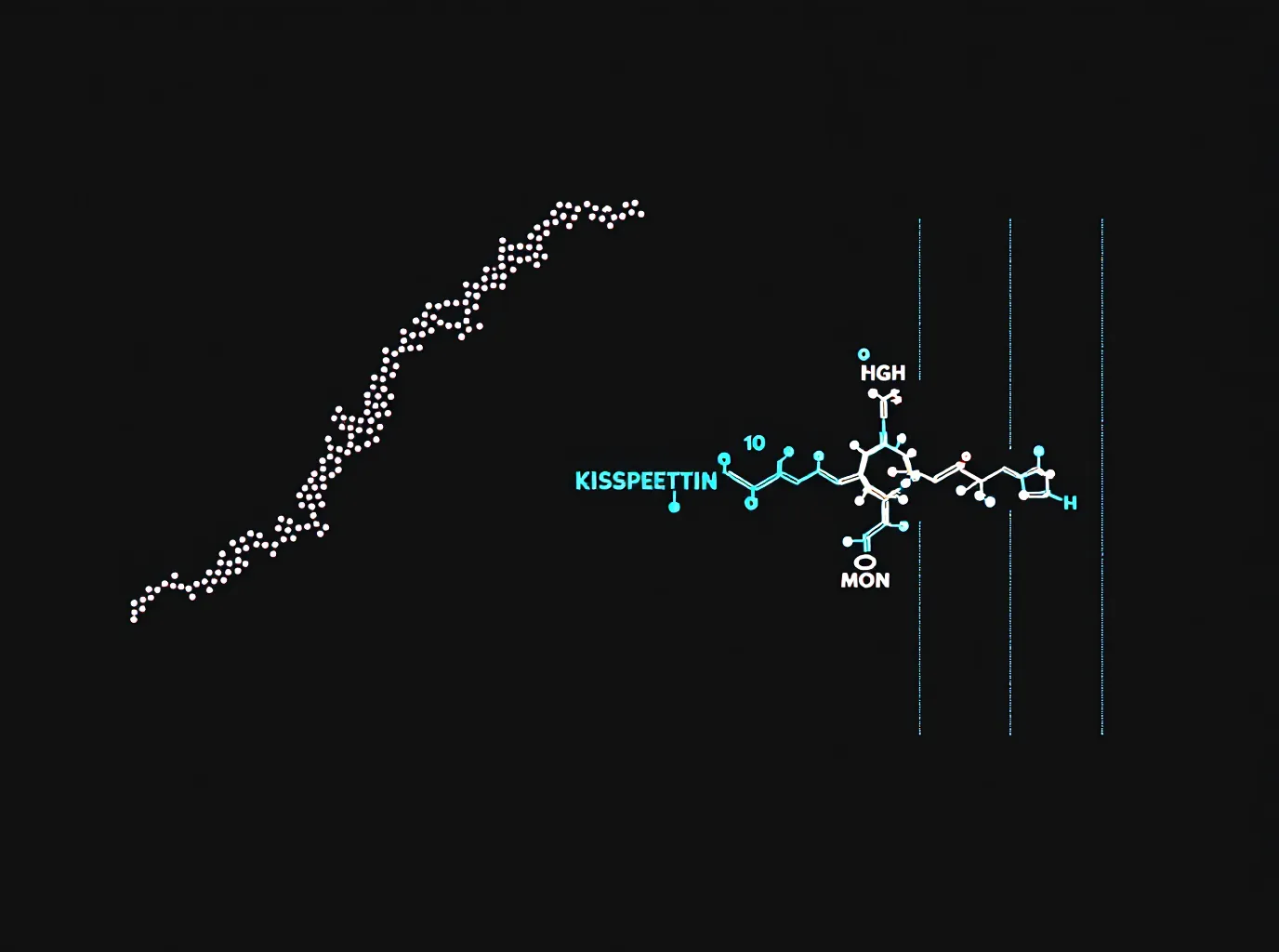
Kisspeptin attaches to a matching place on the outside of certain brain cells, so you can picture that place as a lock and the protein as its key when following the chain. In some families, a harmful change in the lock kept the brain from starting the hormones needed for puberty [1]. In mice bred without a working lock, kisspeptin couldn't raise the two hormones that guide the sex organs [13].
How does Kisspeptin pass its message onward?
Kisspeptin touches the matching place on a brain cell, calcium then moves inside so the cell fires [2], and the cell releases a hormone that calls on the pea-sized gland below your brain. That gland sends two hormones through the blood to the ovaries or testes. Sex hormones follow. Kisspeptin doesn't supply those hormones; it starts the chain.
How does Kisspeptin-10 start the hormone chain?
Kisspeptin-10 makes brain cells fire as calcium moves inside them and gates in the cell wall open or close, letting your brain pass the message onward [2]. The paper calls this relay Gq/11; it carries kisspeptin's touch from outside the cell to calcium held inside. In healthy men, one vein dose of kisspeptin-10 raised the blood hormone that calls on the testes within 30 minutes [3]. Blood enzymes cleared kisspeptin-10 within minutes. For you, the useful finding is a fast hormone rise and quick clearing.
Which brain cells time the Kisspeptin message?
A group of cells deep in the brain times short hormone releases, and in sheep one chemical started those cells while another stopped them during each cycle in the test. Kisspeptin then carried each timed message to the next brain cells [8]. A later review found the same start-stop plan across mammals [9]. The result is a brief release, a quiet pause, and then another release.
What changes can Kisspeptin cause in the body?
Kisspeptin starts your sex-hormone chain by waking certain brain cells; the pituitary gland sits below your brain and sends two guiding hormones toward the sex organs that your body needs. A faulty receiving part can stop puberty [1]. In studies, men had higher guiding hormones and testosterone [16]. Women with stopped periods regained timed hormone releases [4]. IVF patients had eggs mature [5]. Those measured findings don't promise a benefit for you.
Can Kisspeptin raise testosterone in men?
Yes, kisspeptin raised testosterone in one study of healthy men by working through the body's own hormones during a steady vein drip of kisspeptin-10 at 4 micrograms per kilogram per hour. A guiding blood hormone rose first. That hormone then asked the testes for more testosterone [3]. The study can't promise the same rise for you or show whether you would feel a change.
What happened during the men's Kisspeptin drip?
Healthy men received a steady vein drip of kisspeptin-10 at 4 micrograms per kilogram per hour; their blood testosterone rose, along with the hormone that asks the testes to work [3]. That guiding hormone also came in more frequent short releases. This result came from one group and one way of giving the protein. It isn't a general promise or advice about an amount for you.
Did Kisspeptin help eggs mature during IVF?
Yes. A Phase 2 IVF test, an early study looking for benefit, included 60 women who faced a high chance of dangerous ovary swelling, and one kisspeptin-54 shot under the skin helped eggs mature in 95% of them. No woman had a critical, severe, or moderate case of that swelling. Live births peaked at 62% among the tested amounts [5]. Kisspeptin isn't approved for fertility care, so the result isn't a treatment choice for you.
Can Kisspeptin restart the signal before egg release?
A study restarted the timed hormone releases needed before an ovary can free an egg in women who had stopped having periods because their brain messages were too quiet. During a steady kisspeptin-54 drip through a vein, the releases came three times as often over 8 hours. Each release became about six times stronger than with an inactive drip [4]. This showed that the brain signal could restart. It didn't prove each woman released an egg, and kisspeptin isn't an approved treatment for you.
Why do Kisspeptin-10 and Kisspeptin-54 last different times?
Both forms come from the same protein and end with the same building block, which lets kisspeptin-54 and kisspeptin-10 attach to the right brain cells in your body. Kisspeptin-54, also called metastin, has 54 building blocks. Its half-life, the time until half is gone, is near 27-28 minutes in people. Kisspeptin-10 has ten building blocks, and kisspeptin-10 clears in about 4 minutes [3]. The longer form suits tests lasting hours; the short form suits brief tests. Neither has an approved personal use for you.
How does a gene help cells make Kisspeptin?
Your genes carry instructions passed down in your family. One tells cells to make a long protein, which they cut into kisspeptin-54 and shorter forms. The gene sits on a chromosome, a bundle holding inherited traits. Scientists found it in 1996 while studying melanoma, before they knew its hormone job. A harmful change in cells receiving kisspeptin can stop puberty [1]. The contact is needed before your body can have children.
Are metastin and Kisspeptin the same thing?
Metastin was the first name for kisspeptin-54, and scientists chose it when the gene behind the protein seemed to slow cancer from spreading during early cancer work. Metastin and kisspeptin-54 mean the same form with 54 building blocks called amino acids. Cancer work came before scientists learned that the protein starts your sex-hormone chain [1]. If you see metastin in an older paper, it isn't a different compound.
How was Kisspeptin tied to puberty?
Scientists found the gene behind kisspeptin in 1996 while studying human melanoma, then named it for Hershey, Pennsylvania, before anyone knew that the protein helped start hormones for puberty. Around 2001, they learned which part of a brain cell the protein attached to. In 2003, two teams found that harmful changes in that cell part could stop puberty [1]. The brain did not start the needed hormones. That finding placed kisspeptin at the start of the chain for you to follow.
How soon did Kisspeptin change blood hormones?
Healthy men showed a quick blood-hormone change. One kisspeptin-10 dose through a vein raised the hormone that tells the testes to work within 30 minutes [3]. The same blood hormone rose soon after the spray in the 2025 study [6]. These short tests covered minutes to an hour. They don't tell you when a person might feel anything.
What does Kisspeptin half-life mean?
Half-life is the time until half the active amount is gone. Kisspeptin-10 has a working half-life of about 4 minutes in people because blood enzymes cut it apart fast. Kisspeptin-54 lasts about 27-28 minutes [3]. The larger size of kisspeptin-54 slows the breakdown. That is why the longer form appears in studies that needed an effect lasting more time. Half-life doesn't tell you how long a person will feel anything.
How can stress quiet Kisspeptin and stop periods?
Low body weight, very hard exercise, or stress can quiet the brain messages that guide periods. The cells that use kisspeptin then send fewer short hormone releases. In women with this problem, kisspeptin-54 brought those releases back at about three times the rate seen with an inactive drip [4]. The result suggests that the hormone chain can be quiet at the top rather than broken. It doesn't prove one simple cause for everyone.
Why might Kisspeptin cause less ovary swelling in IVF?
Usual IVF trigger drugs can push the ovaries too hard and cause serious swelling that needs medical care. Kisspeptin-54 instead made the body produce a brief rise in its own egg-release hormone. In 60 women at high risk, one shot under the skin helped eggs mature in 95%. No woman had critical, severe, or moderate swelling [5]. The short rise may explain the safety finding, but kisspeptin isn't an approved choice.
Did the Kisspeptin-54 IVF study find severe ovary swelling?
No moderate-to-critical swelling appeared in this study. Eggs matured in 95% of the women facing the problem. Live births peaked at 62% among the tested amounts [5]. Kisspeptin-54 caused a brief rise in the body's own egg-release hormone. Researchers are asking whether that short rise could be gentler than the usual IVF drugs. It is still being studied and isn't an approved replacement for the usual trigger shot.
What did the Kisspeptin stopped-period study measure?
The study measured short releases of the hormone needed before egg release. Women no longer having periods because of quiet brain messages received a steady kisspeptin-54 drip through a vein. Over 8 hours, those releases came about three times as often. Each release was about six times stronger than with an inactive drip [4]. Higher amounts began losing effect. The result may help explain why your periods stopped, but it isn't an approved treatment.
Why does Kisspeptin-54 last longer than Kisspeptin-10?
Kisspeptin-54 is larger, so blood enzymes don't cut it apart as fast as kisspeptin-10. Its half-life is about 27-28 minutes, compared with roughly 4 minutes for the short form [3]. Kisspeptin-10 clears fast, while the longer form touches the right brain cells for more time. In the 2025 nose-spray study, kisspeptin-54 raised the guiding blood hormone in all three groups [6].